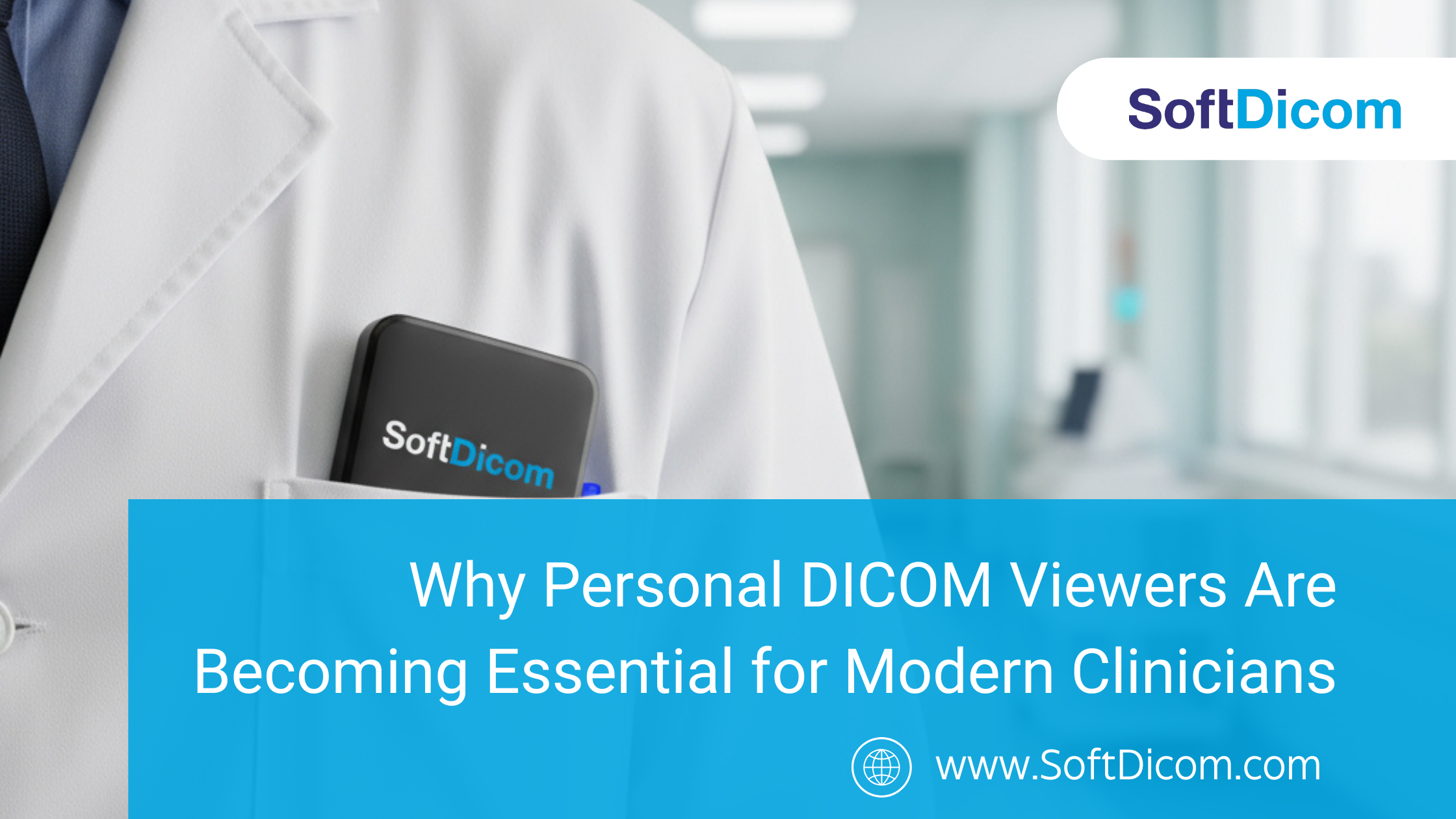
The Future of Medical Imaging Belongs to Doctors, Not Hospital PACS
December 5, 2025Understanding the shift beyond traditional Hospital PACS
Traditional hospital PACS systems have long been the foundation of institutional imaging workflows, but the needs of modern clinicians go far beyond what centralized systems support. With increasing mobility, multi-hospital practice, and academic responsibilities, physicians now require independent access to imaging studies outside hospital networks.
This has led to a significant rise in the adoption of Personal DICOM viewers tools that offer portability, offline accessibility, and long-term case preservation.
The Limitations of Relying Solely on Hospital PACS
While hospital PACS excels at institutional archiving, it presents several limitations for individual clinicians:
• Difficulty exporting DICOM files for teaching and presentations
• Restricted or no offline access
• Loss of case history when changing institutions
• Limited ability to build personal academic or reference libraries
For doctors involved in teaching, presenting, or research, these limitations directly affect productivity and long-term professional growth.
Why Personal DICOM Libraries Matter
A clinician’s career is shaped by the cases they encounter. Maintaining a personal archive helps with:
• Academic presentations
• Case-based learning
• Publishing research and clinical articles
• Training medical students and fellows
• Reviewing rare or complex cases over time
A personal DICOM repository ensures uninterrupted access to valuable material, regardless of workplace or system constraints.
What Modern DICOM Viewers Offer
Modern DICOM viewers provide features tailored to individual use, including:
• Cross-platform compatibility across Windows, macOS, and Linux
• Private and secure local storage
• Full offline functionality
• Easy DICOM export for external use
• Flexible case organization by category, disease, or modality
This independence allows clinicians to study, compare, and present cases anytime they need—without relying on hospital PACS permissions.
Evaluating Alternatives to Traditional Solutions
Tools like OsiriX and RadiAnt have been widely used, but they come with inherent limitations:
• OsiriX works only on macOS
• RadiAnt works only on Windows
• Both depend heavily on access to institutional PACS
• Neither offers portable, personal PACS-style storage
Newer solutions bridge these gaps by offering cross-platform viewing, personal case storage, offline access, and simple DICOM export in one package.
One such solution is SoftDicom, which provides a plug-and-play portable PACS design with integrated DICOM viewing. It allows clinicians to maintain secure personal case libraries, export DICOM files, and access studies without network dependencies—making it a practical choice for doctors who want both flexibility and control.
A Growing Need for Independent Imaging Tools
As medical professionals increasingly participate in conferences, global collaborations, and multi-center clinical work, the demand for independent imaging access continues to expand.
Key capabilities now expected by clinicians include:
• Exporting DICOM files easily
• Maintaining lifetime personal case archives
• Working offline without hospital network access
• Using cross-platform imaging tools
• Reviewing cases across time and institutions
These capabilities represent the future of medical imaging at the individual level.
Summary
The evolution of clinician workflows has made personal DICOM viewers and portable PACS systems invaluable. They ensure long-term case preservation, improve academic productivity, and provide the portability required in modern healthcare.
For those exploring options that support cross-platform viewing, offline access, personal storage, and DICOM export, several advanced solutions are available today—including SoftDicom, which integrates these capabilities into a single portable environment.
Learn more at:
www.softdicom.com
0 Comments